
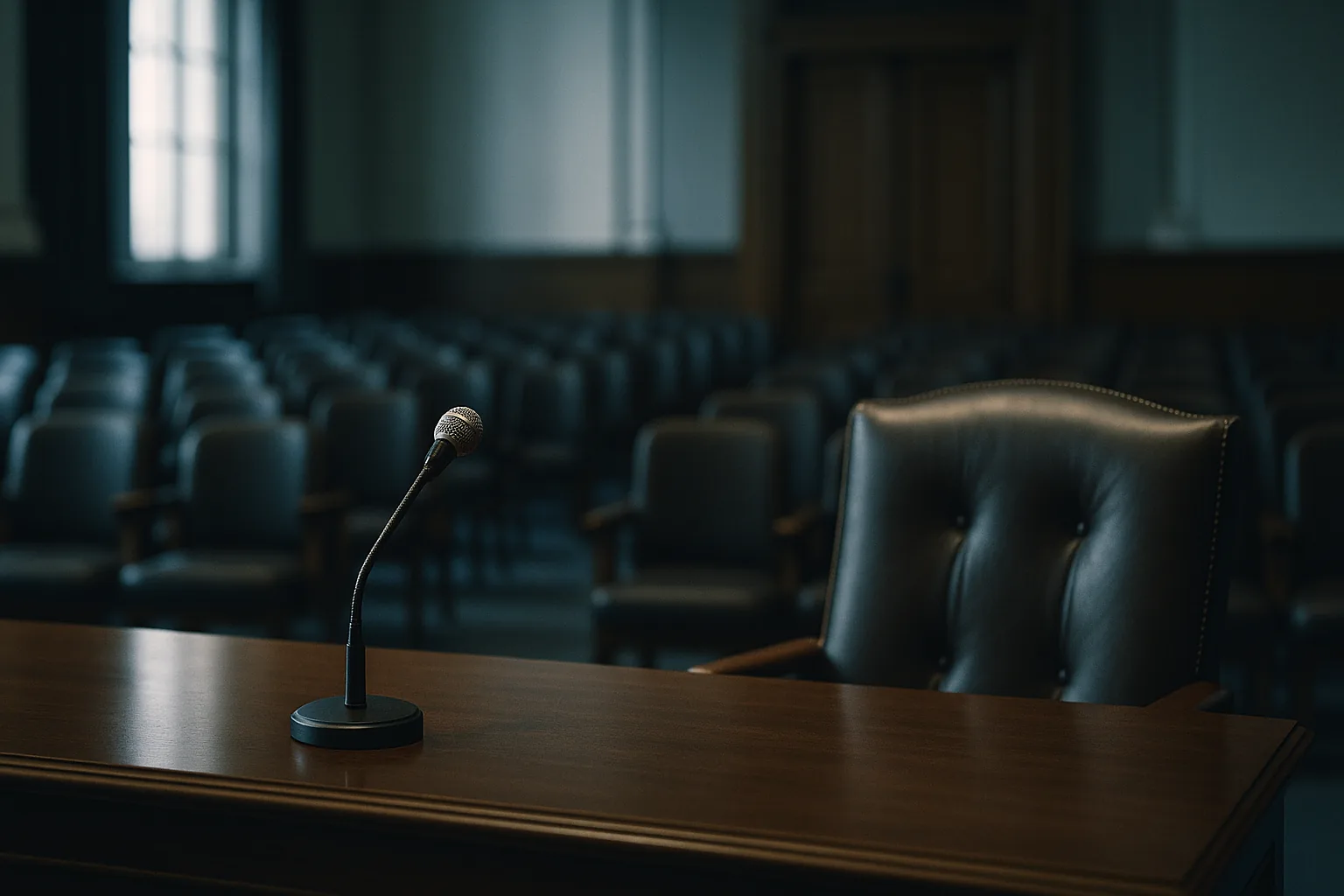
Three years from now, the most expensive AI system in the world fails a one-word test.
A regulator leans into the microphone.
“Why?”
Silence.
The company brought everything. The prompts. The logs. The model version. The deployment records. The GPU telemetry. The entire stack. Everything.
Except the answer.
The AI made the decision. And no one in the room — not the engineers, not the lawyers, not the model itself — can say why.
That is the moment the industry learns the truth about what it built. We taught machines to decide. We never taught them to explain.
AI Already Decides — Can You Prove Why?
This isn’t a future problem. Right now, today, AI already decides:
- who gets a loan
- who gets insurance
- who gets approved for benefits
- who gets flagged for fraud
- who gets hired
- who gets investigated
And behind every one of those decisions sits a question most organizations cannot answer.
Can you prove why?
Not estimate. Not guess. Not generate a clean story after the fact. Prove it. Not in a courtroom. Not in an audit. Not when the regulator is already in the building.
The Industry’s Quiet Secret: Explanation Comes After
Here is the secret the industry doesn’t say out loud. Explanation almost always happens afterward. The outcome comes first. Then the reconstruction.
A prompt gets pulled. A model gets queried. A dashboard prints a confidence score. An auditor gets a report. And everyone quietly hopes the story is close enough.
But close enough is not evidence.
An Airliner With No Black Box
Picture an airliner with no black box. After the crash, investigators don’t open a recorder. They ask another AI what it thinks probably happened.
Would you board that plane? Neither would I. Yet that is how most of the industry handles AI accountability right now.
AI No Longer Just Answers — It Acts
And it is getting worse. Because AI no longer just answers. It acts. It buys. It approves. It opens databases. It triggers workflows. It calls other systems. It hands off to other agents.
Every action is a door. And once an AI walks through a door in the real world, you cannot un-walk it.
So organizations spend. Millions on security. Millions on compliance. Millions on monitoring. And still freeze when the regulator asks the only question that matters:
“Show me exactly why.”
The First Answer: Govern Before, Not Explain After
But there is an answer. Stop explaining after. Govern before — before the response, before the action, before the tool call, before the approval.
Every request — recorded. Every rule — enforced. Every decision — signed. Every step — replayable.
Build the machine that forgets nothing. The prompt, captured. The policy, applied. The version, pinned. The output, sealed. The whole chain, reproducible on demand — bit for bit, forever.
Give the regulator a button. Press it, and the past replays exactly as it happened. No reconstruction. No guessing. No “close enough.” Proof.
That feels like the answer. For a while, everyone believes it is.
The Perfect Record That Still Failed
Three years later, a different hearing room. A different company. This one did everything right. It recorded every prompt. It signed every decision. It enforced every policy. It pinned every version. It built the perfect, unbreakable, replayable record.
The regulator leans into the microphone.
“Why was this person denied?”
And this time, the company is ready. They press the button. The system replays. Same inputs. Same model. Same policy. Same output. Same denial. Flawless. Reproducible. Signed. Provable.
The regulator watches the whole thing. Then says:
“No. I didn’t ask what happened. I asked why.”
Silence. The same silence. Because the perfect record proved everything the machine did — and not one thing about why it did it.
We Can Prove the What. Not the Why.
That is the part nobody wants to say. We can prove the what. We have no idea how to prove the why.
Imagine discovering that your mortgage application was denied by a system nobody can explain. Not because anyone acted maliciously. Not because anyone broke the rules. Because there simply are no rules anyone can point to. Only outputs. And outputs are not accountability.
We built a machine that remembers everything and understands nothing — then wrapped an audit trail around it and called it accountability.
The logs were never the hard problem. The answer was.
We Were Interrogating the Wrong Machine
And then comes the part that should have been obvious from the beginning. We were interrogating the wrong machine.
Every time someone demands to know why the AI decided, they are asking the model to confess. To open the black box. To narrate billions of weights no human can read. It can’t. It never could. That problem may not be solved in our lifetimes.
But hidden underneath that impossible question was a second one. A quieter one. The one we were actually owed. You were never owed the model’s why. You were owed the decision’s why. And those are not the same thing.
The Model’s Why vs. the Decision’s Why
The model’s why lives inside the black box, unreachable. The decision’s why lives somewhere else entirely — in the rules that were allowed to turn a model’s suggestion into a person’s outcome.
The mistake was never that we couldn’t read the model’s mind. The mistake was that we let the model be the last word.
Take Away the Last Word
So take the last word away from it. Put something between the model and the world.
The model proposes. The system decides.
And the system decides in rules a human wrote, against thresholds a human set, through checks a human can read, with exceptions a human approved.
Now ask the question one more time. “Why was this person denied?” And this time there is an answer. A real one. Not “the model felt strongly,” but: this decision was made under this policy, against these criteria, at this threshold, with this override path — and here is the human who owns it.
It Was Always About Who Holds the Pen
That is the whole revelation. We spent a decade trying to make the black box confess. The answer was to stop putting the black box on the witness stand.
You don’t make AI accountable by reading its mind. You make AI accountable by refusing to let its mind be the final authority.
It sounds simple. It is the hardest thing in the industry to build. It means every output passes through something that governs it before it becomes an action. Every proposal weighed against policy before it touches a real life. Every decision authored by a system that can be read — not a model that can only be guessed at.
And the first time you watch a machine get asked why — and actually answer — you stop believing the race was ever about intelligence. It was always about who holds the pen.
We thought the future belonged to the machine that could answer every question. We may have been wrong. The future may belong to the system that can answer one.
Why.
Author’s Note
The AI industry has spent years trying to explain model behavior after decisions are made. I believe accountability starts earlier. Not with explainability. With governance.
The systems that will earn trust over the next decade won’t be the ones that generate the most impressive outputs. They’ll be the ones that can prove how decisions were authorized, constrained, and owned before those outputs ever reached the real world.
That’s the problem we’re working on at EVE NeuroSystems.